
Green Guide creates immersive learning experiences that help students explore nature, understand ecological relationships, engage with knowledgeable people, and continue learning beyond the classroom.
About Us
How Green Guide Took Shape
A Love for Nature and Exploration
Green Guide began with a deep interest in nature, travel, wildlife, documentation, and meaningful experiences in the outdoors.
A Gap in the Way Students Learn
Many students learn about forests, biodiversity, conservation, and ecosystems mainly through textbooks, with limited opportunities to observe these ideas directly.
From Field Visits to Learning Journeys
The idea evolved beyond excursions and sightseeing into structured experiences built around observation, enquiry, expert guidance, activities, and reflection.
Building a Learning Ecosystem
Green Guide is now bringing together schools, subject matter experts, naturalists, field partners, educators, and technology to support continuous experiential learning.
What We Do
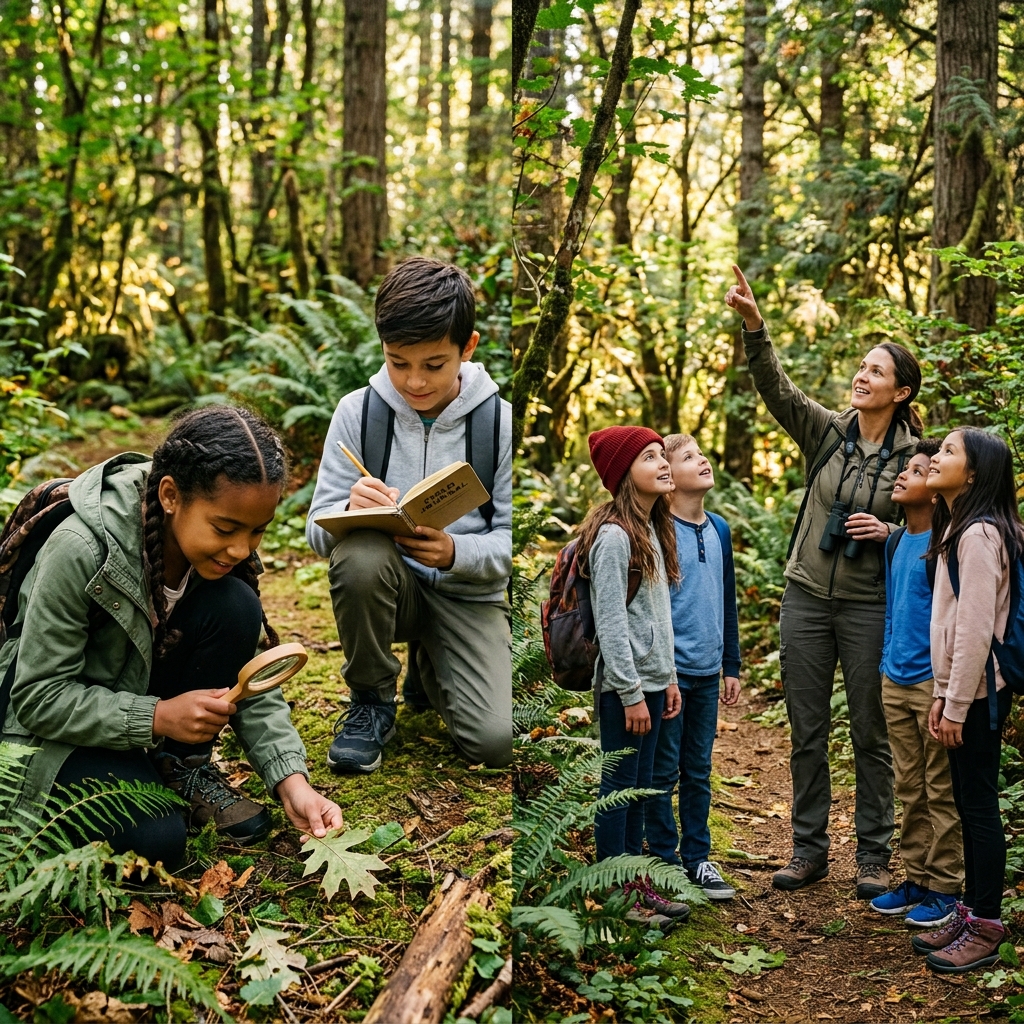
Green Guide designs and facilitates curriculum-connected experiential learning programs, currently focused on ecology and biodiversity.
Our programs combine field immersion, guided observation, hands-on activities, interaction with experts, student documentation, reflection, and continued engagement.
The objective is not merely to take students to a new place. It is to help them understand what they encounter, ask better questions, connect observations with classroom concepts, and develop a more responsible relationship with the natural world.
Our Learning Approach
Experience
Learners engage directly with ecosystems, species, landscapes, communities, and real-world situations.
Observe
They notice patterns, record findings, ask questions, and investigate what they encounter.
Understand
Naturalists and subject matter experts help connect field observations with scientific concepts and wider ecological relationships.
Continue
Projects, mentorship, learning materials, and follow-up activities allow the experience to develop into an ongoing learning journey.
Vision and Mission
Our Vision
To build a trusted experiential learning ecosystem that inspires curiosity, deepens understanding, and nurtures responsible relationships with nature and the world around us.
Our Mission
To create thoughtfully designed, curriculum-connected learning experiences through field immersion, observation, enquiry, expert guidance, reflection, and continued engagement.
People Behind the Learning
Educators and Mentors
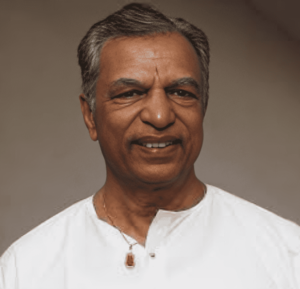
Prof. E S Dwarakadasa
Mentor & Guide
Prof. E S Dwarakadasa
Prof. E. S. Dwarakdasa is a former Professor of Metallurgy at the Indian Institute of Science, Bengaluru, and an accomplished academic, industry leader, and institution-builder. A teacher throughout his life, he continues to mentor and guide with the same commitment to learning and knowledge-sharing. He has been a constant source of inspiration to Green Guide, helping shape its vision with wisdom, clarity, and purpose.
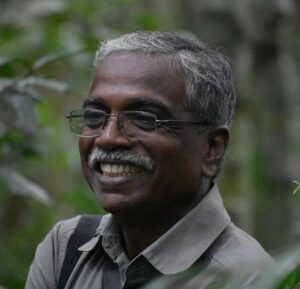
Dr. R Ganesan
Mentor and Advisor
Dr. R Ganesan
Botanist and Nature Educator
Dr. R. Ganesan is a distinguished botanist, biodiversity researcher, and nature educator with over 25 years of experience in plant diversity, taxonomy, and conservation across the Western Ghats, South India, and Northeast India. He has made significant contributions to the Ashoka Trust for Research in Ecology and the Environment (ATREE) and currently serves as an Adjunct Fellow.
A passionate advocate for nature education, Dr. Ganesan believes that inspiring curiosity and appreciation for the natural world among young people is fundamental to conserving biodiversity in the Anthropocene. Through his work in research, field ecology, and science communication, he connects ecological knowledge with education, empowering students, educators, policymakers, and communities to better understand the complex relationships between nature, society, and sustainable development. His vision is to nurture environmentally conscious citizens who can make informed decisions for a resilient and sustainable future.
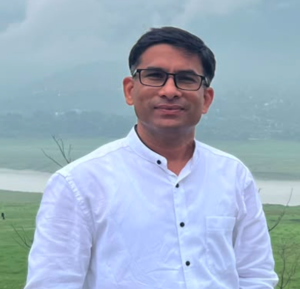
Dr. Chetan H C
Mentor and Advisor
Dr. Chetan H C
Climate Practitioner | Field Ecologist | Educator
Dr. Chetan H.C. is a climate practitioner, field ecologist, and educator with over two decades of experience spanning ecosystem conservation, environmental education, curriculum development, and experiential learning. His work bridges science, nature, and education by transforming field-based knowledge into meaningful learning experiences for students, teachers, and institutions.
He has contributed extensively to the development of primary and secondary education curricula, designed experiential learning programmes, served as a Teacher Educator at the Azim Premji Foundation, and worked as an Associate Professor at the Trans-Disciplinary University, where interdisciplinary and experiential approaches to education are central to the learning process.
Driven by a vision of equitable education, Dr. Chetan believes that many young people, particularly those from rural and semi-urban India, possess immense potential but often lack access to quality learning resources, industry exposure, and professional networks. Through Green Guide, he is committed to bridging this gap by creating meaningful connections between academia, industry, and emerging opportunities. His mission is to equip students with future-ready skills, scientific thinking, and real-world experiences, empowering them to compete confidently in an evolving global workforce while contributing to a more sustainable future.
Core Team
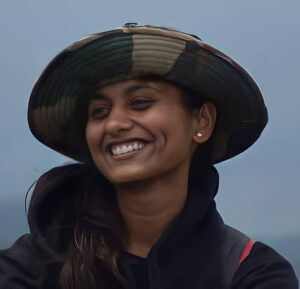
Dr. Kavana R
Ecology, Climate & Sustainability Specialist
Dr. Kavana R
Kavana is an Environmental & Sustainability Specialist with nearly five years of experience at the intersection of ecology, climate science, and community resilience. She holds a Master’s in Environmental Science from Bangalore University (University Second Rank holder) and is a Ph.D. research scholar in the same department, alongside NET/JRF and KSET qualifications. Her work spans forest ecology, ecosystem services, and geospatial science — including carbon stock estimation in the Western Ghats using remote sensing and machine learning, carrying capacity assessment at Bandipur Tiger Reserve, and riparian restoration research for the Krishna River Basin under MoEF&CC. She has taught MSc/BSc Environmental Science at Bangalore University and served as District Coordinator for a Government of Karnataka livelihoods program supporting 6,000 vulnerable rural households.
She currently works as an ESG and Climate Scientist, advising organizations on climate risk, carbon markets, and net-zero strategy. A published researcher with peer-reviewed papers on forest rights, ecosystem services, and climate-agriculture interactions, Kavana brings together rigorous science, field experience, and policy fluency — with a particular passion for forests, community livelihoods, and translating ecological research into practical, on-ground impact.
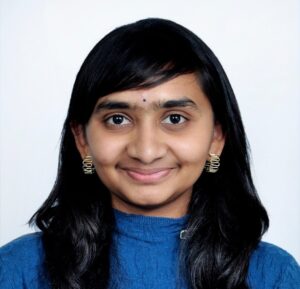
Vaishnavi Lokesh
Environmental Education & Community Research Specialist
Vaishnavi Lokesh
Vaishnavi Lokesh is a postgraduate in Environmental Studies (Conservation Practice) from ATREE (Ashoka Trust for Research in Ecology and the Environment) and holds a bachelor’s degree in Chemistry, Botany, and Environmental Science from Mount Carmel College. She currently works as a Research Associate on the NAHAR (New Age Hydro-Agricultural Regime) project at ATREE, which focuses on understanding wastewater governance and the impact of wastewater irrigation on the environment and society. Her work includes conducting field surveys, stakeholder interviews, and focus group discussions to understand community perspectives on water-related issues. She is also involved in data management, analysis.
Alongside her research, she is an education enthusiast exploring learning through the lens of nature. She is keen in designing hands-on, interactive activities that encourage curiosity, observation, and critical thinking. During her postgraduate internship with Eklavya in Madhya Pradesh, she developed and implemented a place-based education module centred on medicinal plants for middle school students. As part of this work, she documented traditional medicinal plant knowledge through children’s participation and explored the opportunities and challenges of implementing place-based learning in an Adivasi context.
Driven by her interests in environmental education, birds, and teaching, she hopes to continue learning, experimenting, and creating meaningful connections between nature and education.
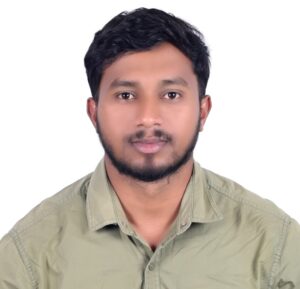
Dr. Gopi M
Biodiversity, GIS & Field Ecology Specialist
Gopi M
Gopi M. is an Environmental and Biodiversity Specialist with over six years of experience in ecological research, biodiversity conservation, geospatial analysis, and sustainability. He currently works as a Junior Ecologist at Treeties Network Pvt. Ltd., where he supports environmental and biodiversity assessments, GIS-based ecological analysis, and biodiversity reporting aligned with global frameworks such as TNFD, GRI, BRSR, IFC Performance Standards, and the Society for Ecological Restoration model.
He holds an M.Sc. in Environmental Science from Bangalore University and is currently pursuing a Ph.D. focused on the Shola forest–grassland ecosystems of the Western Ghats. His work has included vegetation assessments, bird and biodiversity surveys, ecological footprint studies, environmental audits, and landscape ecology research. He is also a certified Remote Pilot and has experience using GIS, Remote Sensing, and Google Earth Engine for ecological applications.
He is passionate about nature education and enjoys sharing scientific knowledge through interactive field experiences that inspire conservation awareness and environmental stewardship.
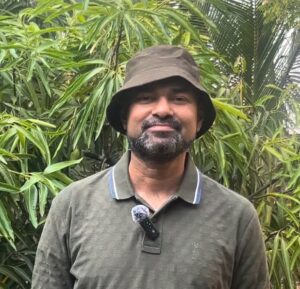
M R Rajaram
Founder & Experiential Learning Lead
M R Rajaram
A nature enthusiast, traveller, writer, photographer, and operations professional, Rajaram has spent years exploring landscapes, observing wildlife, documenting journeys, and learning from people closely connected with nature.
Green Guide grew from his belief that learning becomes deeper when students are given opportunities to observe directly, ask questions, interact with experts, and reflect on their experiences. Through Green Guide, he aims to create meaningful journeys that help learners understand the natural world—not merely as a subject, but as a living system to which they belong.