
Duration: One Day
Suitable for: Grades 6–10
Group Size: 40–50 students per batch
Agriculture Immersion Program
Experiential Learning Activities
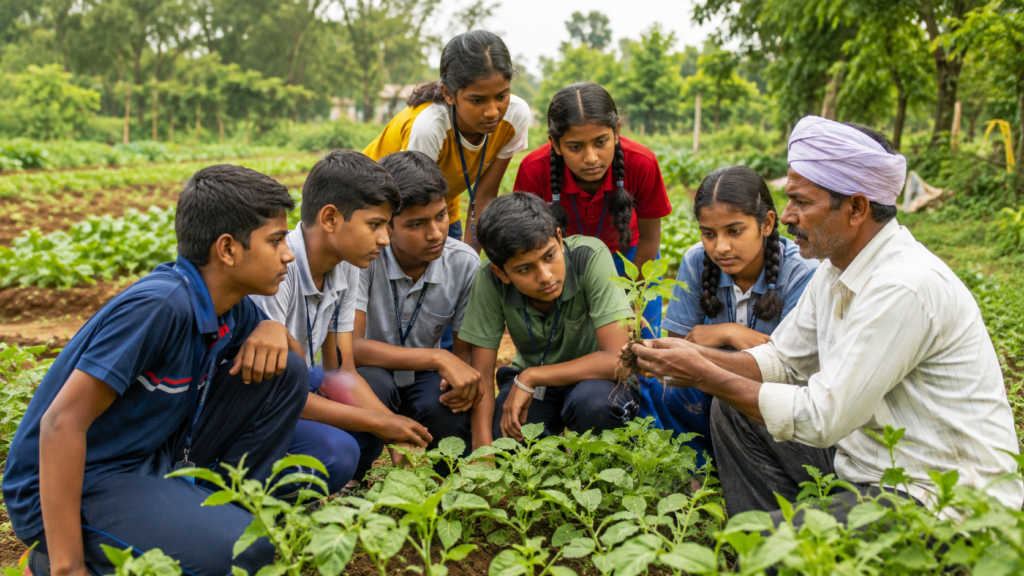
- Interactive session with farmers to understand traditional and modern farming practices
- Hands-on seedling planting and nursery activities
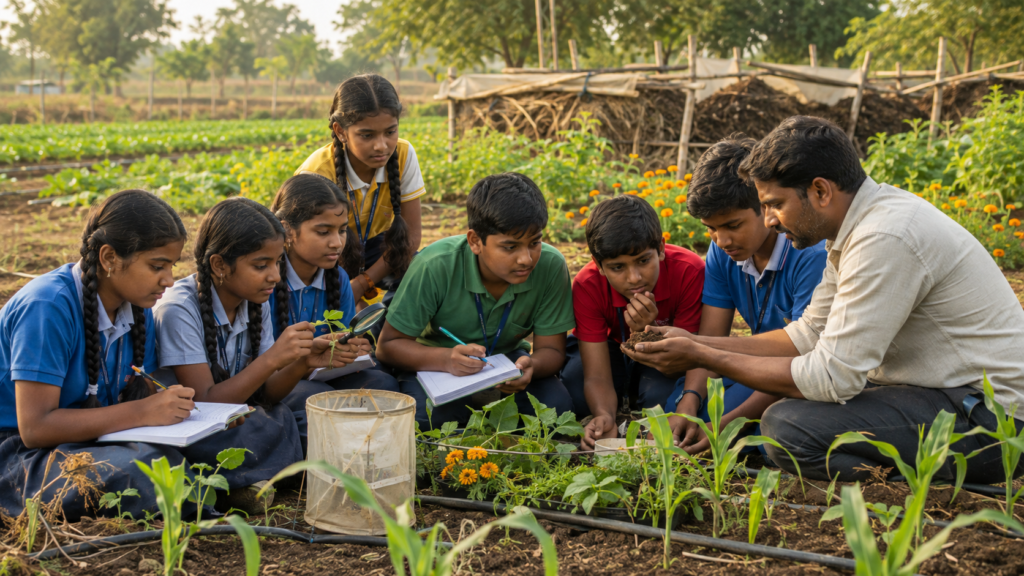
- Explore soil types, seasonal crops, and cultivation practices
- Observe pollinators, insects, earthworms, weeds, and other forms of on-farm biodiversity
- Understand irrigation, composting, manure, and sustainable farm practices
- Participate in group observation, illustration, discussion, and presentation activities
Learning Outcomes
By the end of the program, students will be able to:
- Understand the fundamentals of sustainable farming systems and basic crop cultivation
- Connect classroom concepts with real agricultural ecosystems
- Understand the role of:
- Pollinators and beneficial insects
- Earthworms and soil health
- Pest insects and weed ecology
- Irrigation systems
- Farmyard manure and composting
- Invasive species
- Farm biodiversity and ecosystem services
- Observe how soil, plants, insects, water, and human activity interact within a farm ecosystem
- Strengthen scientific observation, critical thinking, teamwork, and enquiry through hands-on field learning